Breeding
Females carry eggs beneath the abdomen and release miniature shrimp—there is no free-swimming marine larval stage. Intake guards and dense fine cover materially improve shrimplet survival.
The Room · Livestock catalogue
A practical guide to the freshwater invertebrates currently living in our systems: what they are, which forms we keep, how we operate their water, and where the identification still needs evidence.
House photography is replacing reference images as the room record grows. Any remaining reference photograph shows the species or likely genus—not one of our exact animals.
Return to The RoomDwarf shrimp
Neocaridina davidiOften listed historically as N. heteropoda
A small, fully freshwater shrimp whose colour lines can be selected over generations. Mature biofilm, steady minerals, and stable water matter more than chasing a perfect number on any one test.
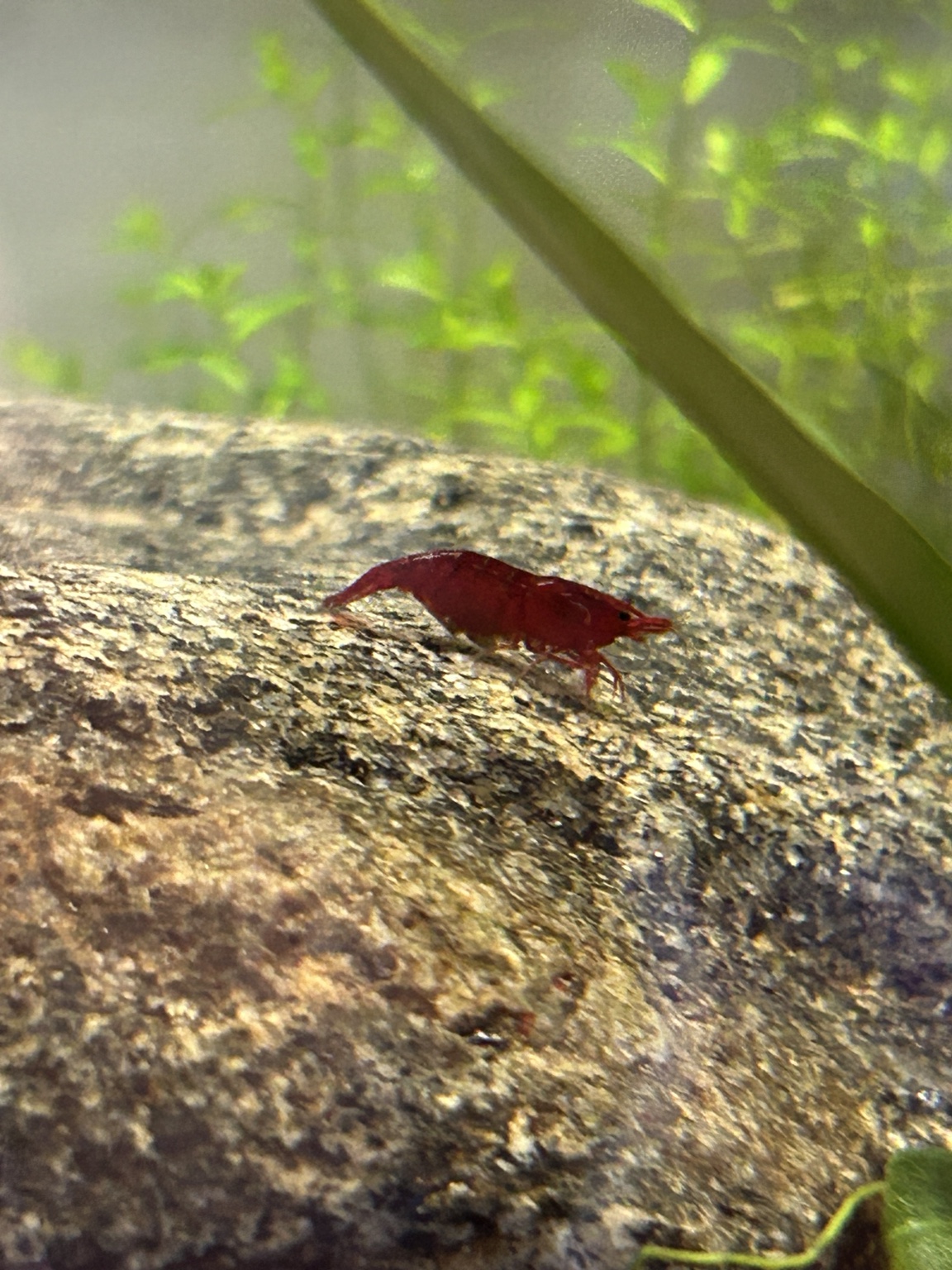
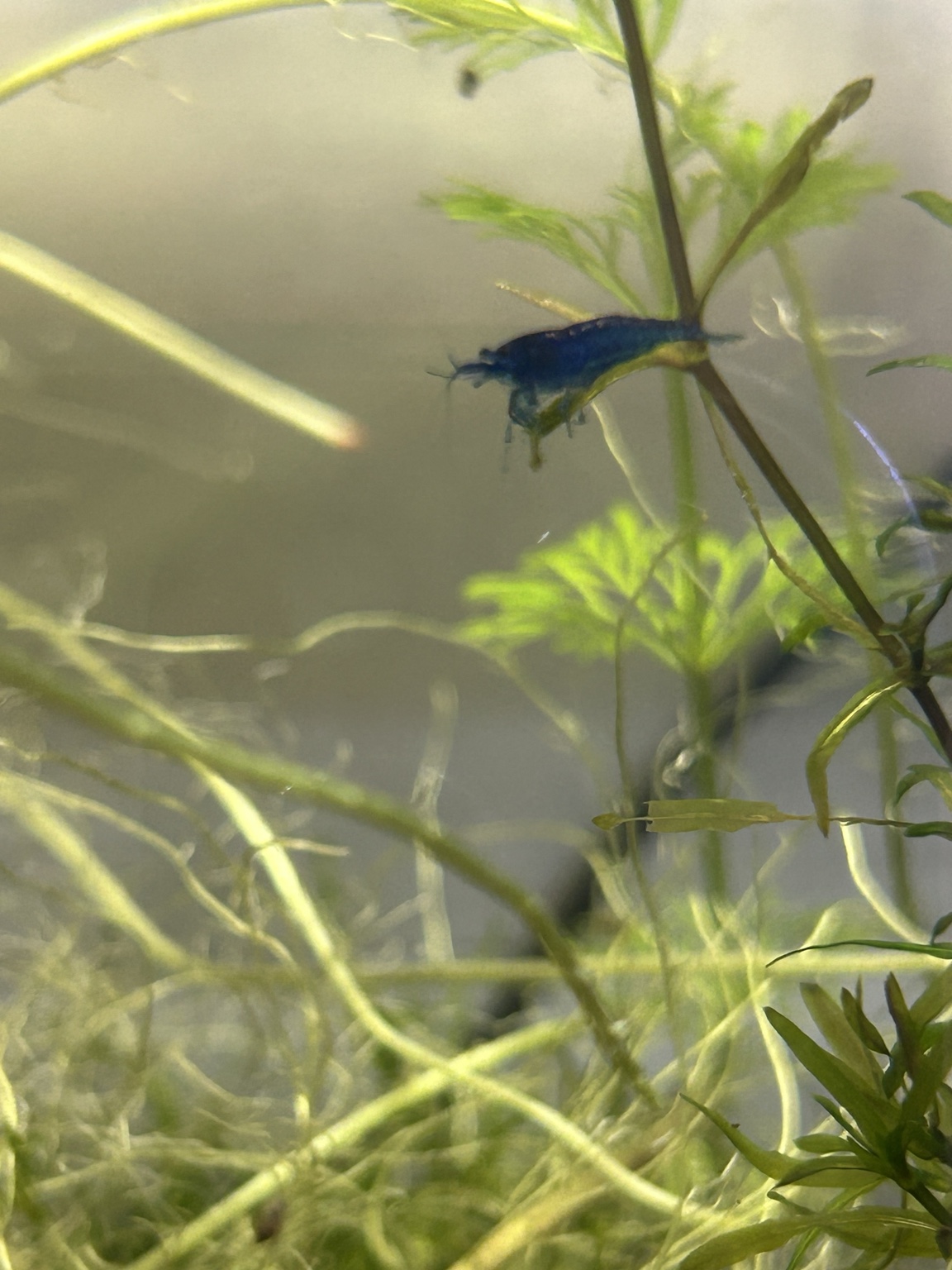
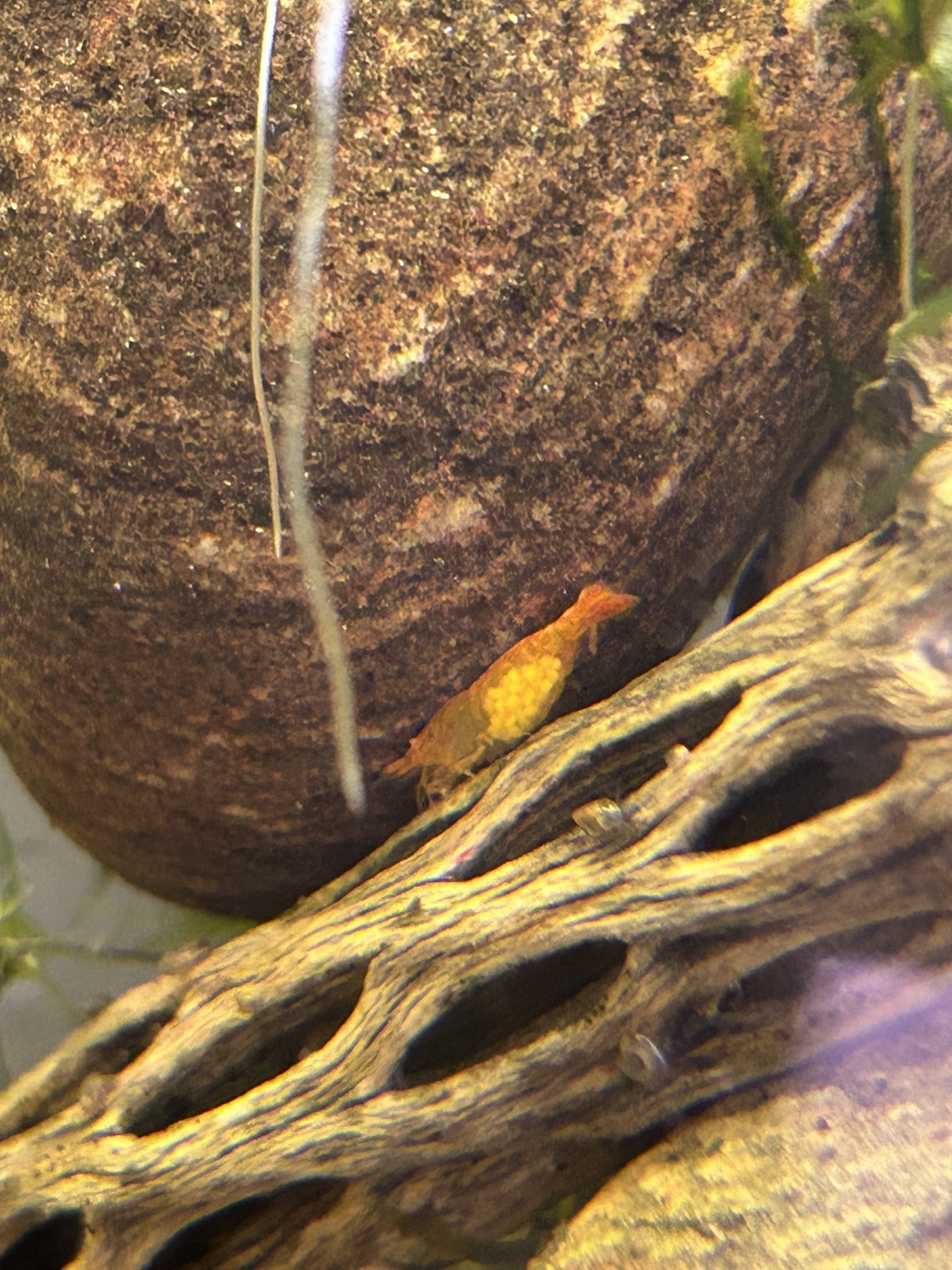
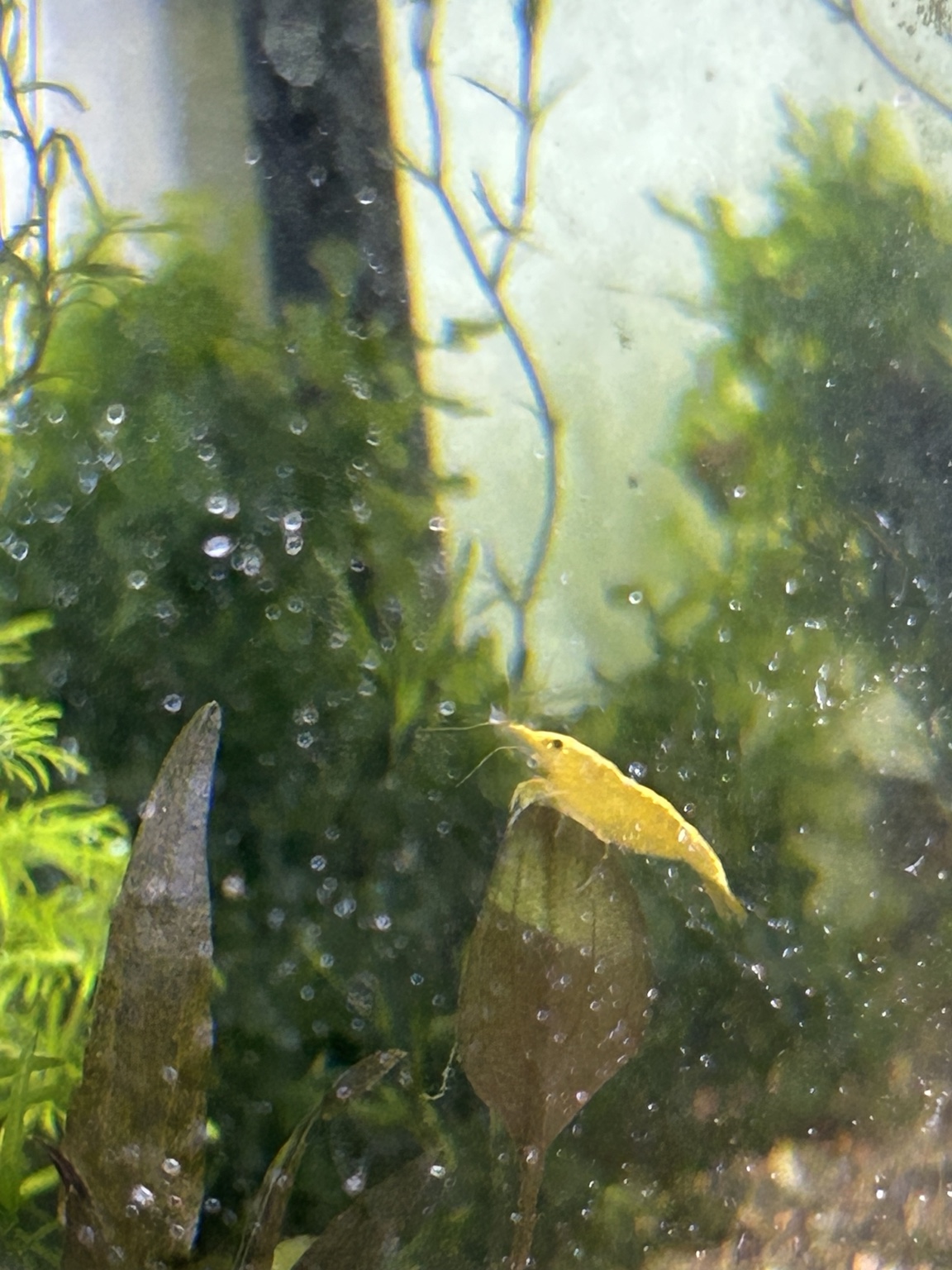
In our room
Four active breeding lines, each kept separately to preserve colour and track outcomes cleanly.
Lines in the room
Operating target
These are the working targets for our systems—not the outer survival limits claimed for the species.
Females carry eggs beneath the abdomen and release miniature shrimp—there is no free-swimming marine larval stage. Intake guards and dense fine cover materially improve shrimplet survival.
The four colours are the same species and can interbreed. Keeping them apart preserves selection work and prevents the records from becoming guesswork.
TDS is a useful consistency check, not a mineral recipe. GH, KH, source water, and the actual remineralizer still determine what that number means for moulting and shell formation.
Freshwater shrimp
Caridina multidentataFormerly common in the hobby as C. japonica
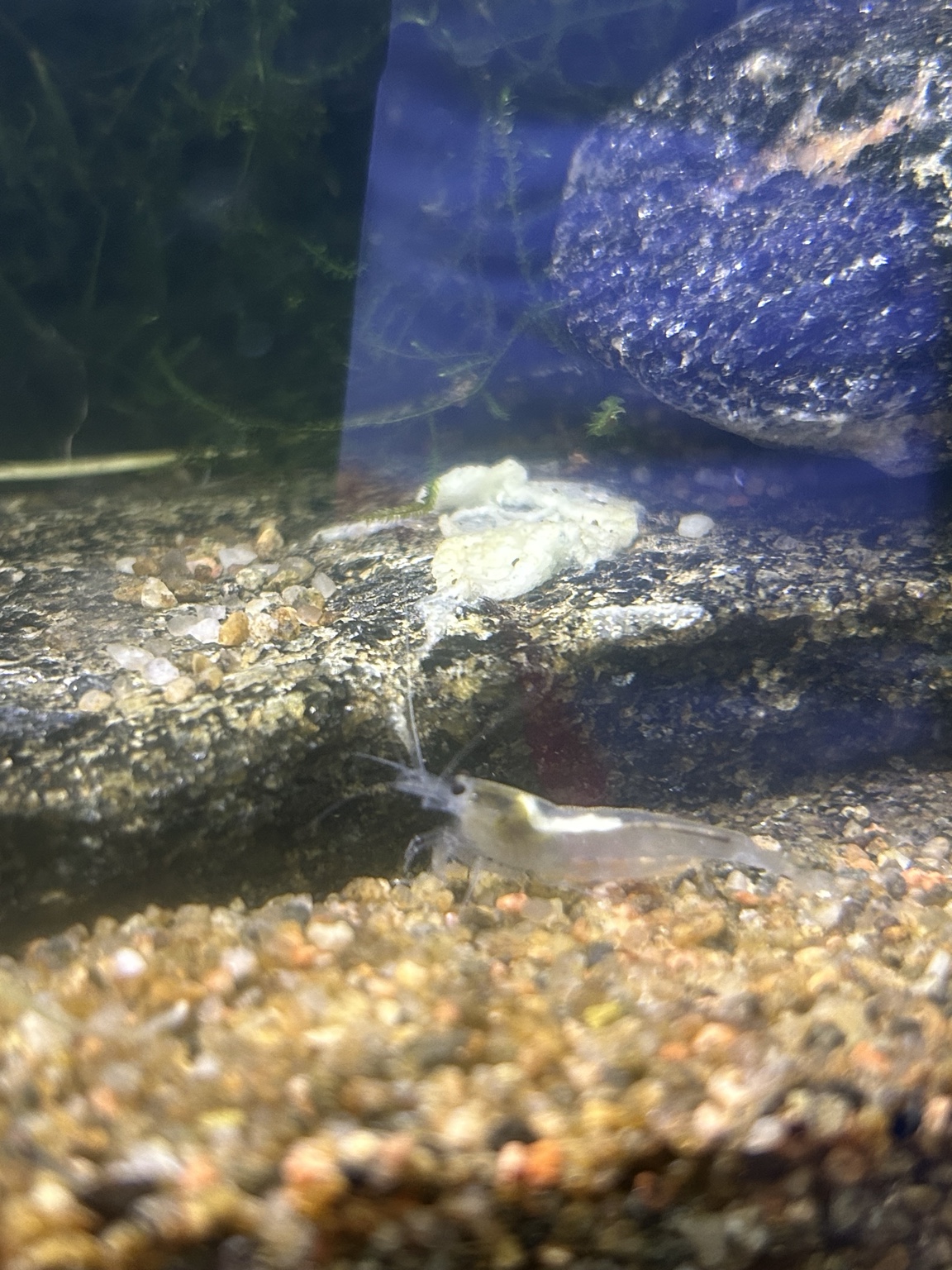
A larger, active grazer with an amphidromous life cycle: adults live in freshwater, while newly hatched larvae require salt water to develop before returning to freshwater as post-larvae.
In our room
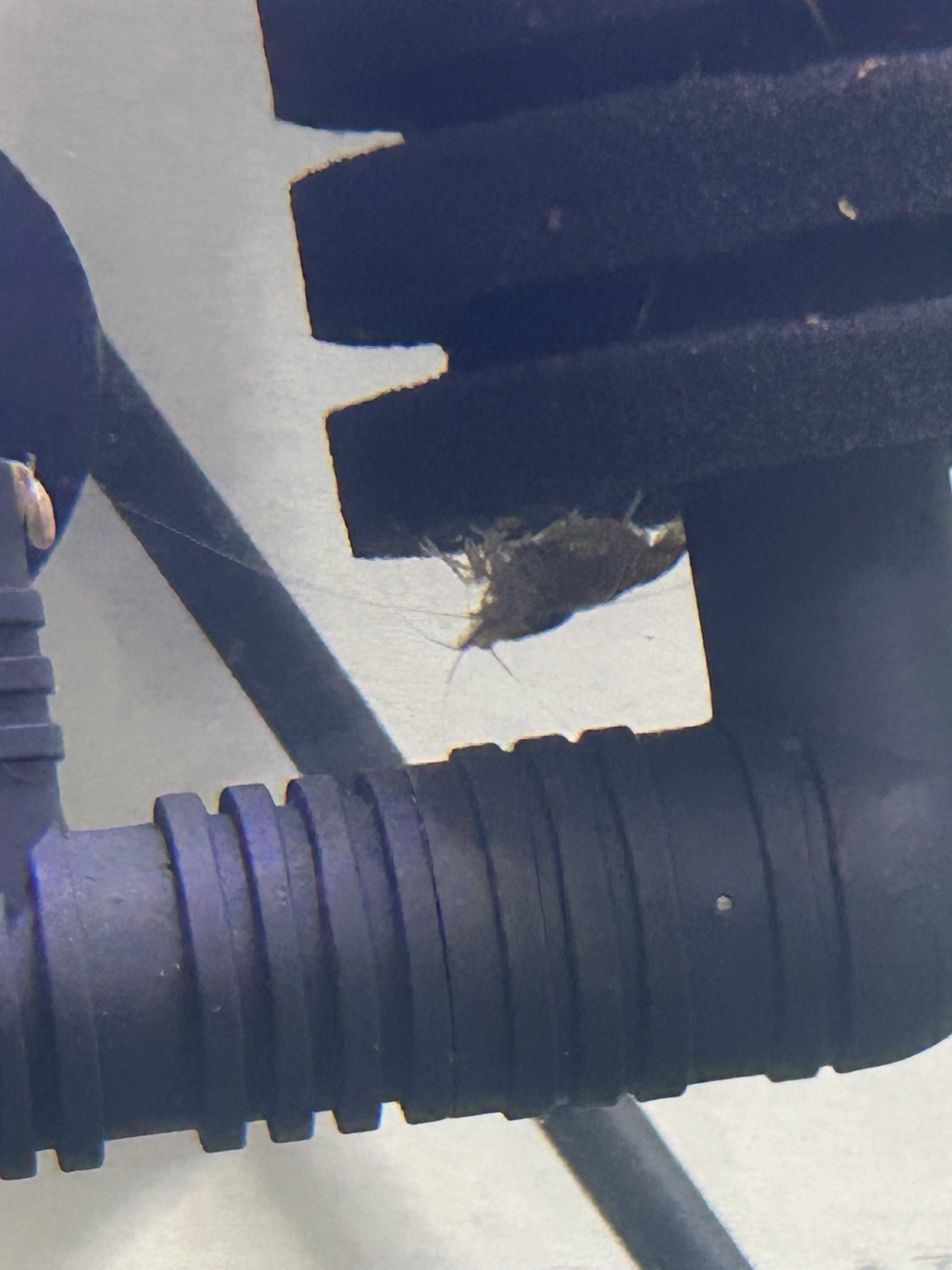
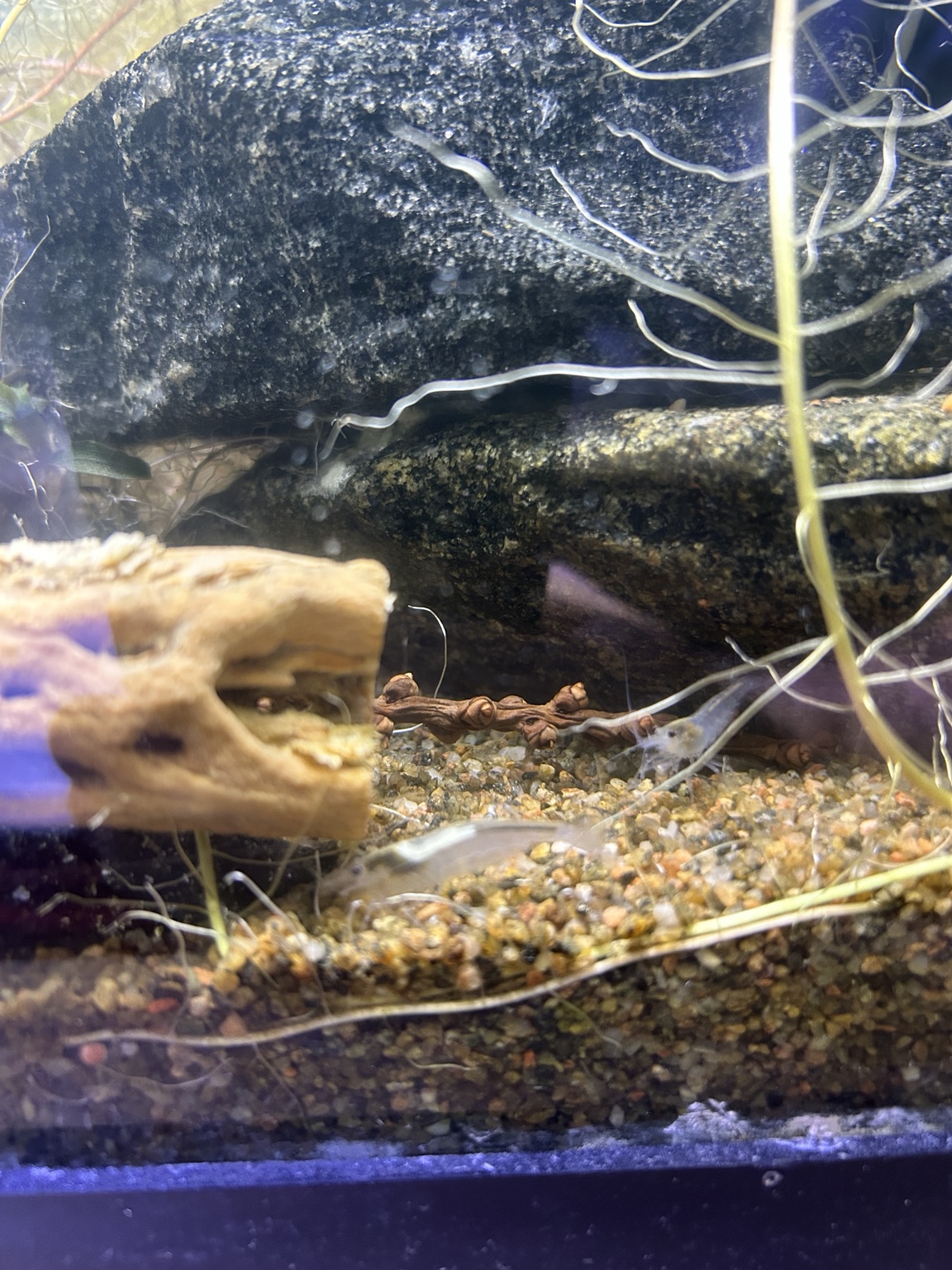
Two adult groups are current. T-005 holds five wild-type animals as of the September 7 record; T-006 holds the white phenotype group, last exactly censused at 20 on August 23.
Groups in the room
Operating target
These are the working targets for our systems—not the outer survival limits claimed for the species.
The adults stay in freshwater. The separate larval programme currently targets 30 ppt (SG ~1.022); that figure does not belong on an adult Amano tank label.
Rock faces, wood, filters, and shaded edges all provide grazing area and refuge. A secure lid matters: Amanos are capable climbers, especially when stressed or following wet airline and cable routes.
The white group is recorded as a captive-bred trade phenotype of C. multidentata, not as a different species. The line will stay documented by source until its inheritance is better understood.
Planorbid snail
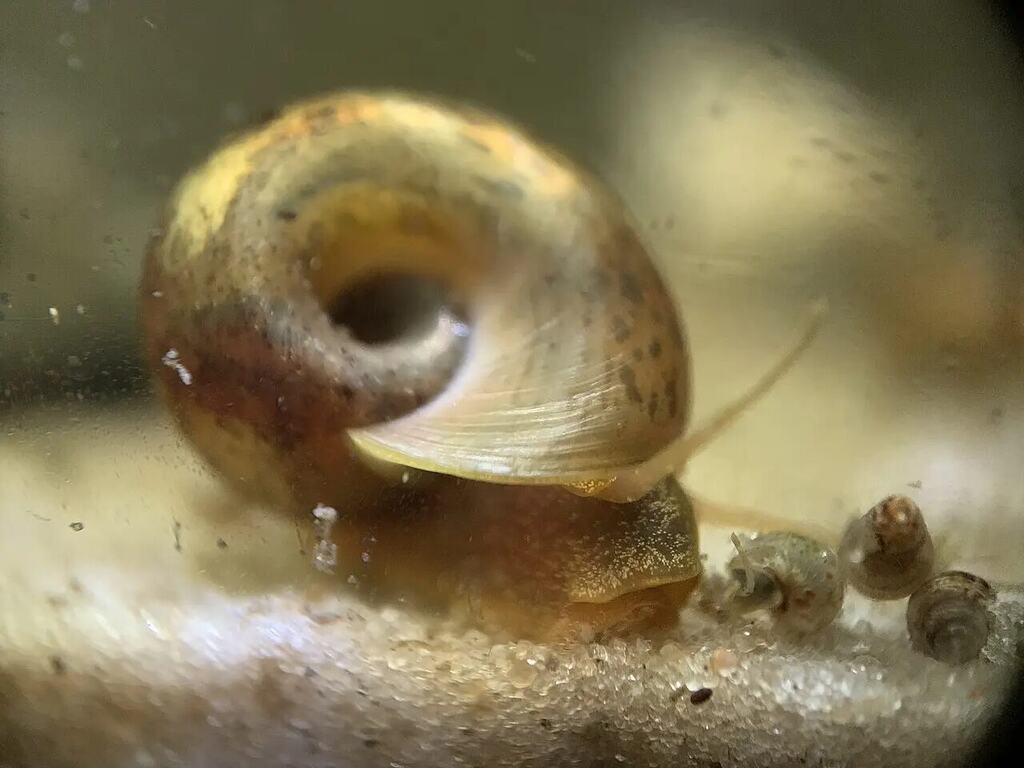
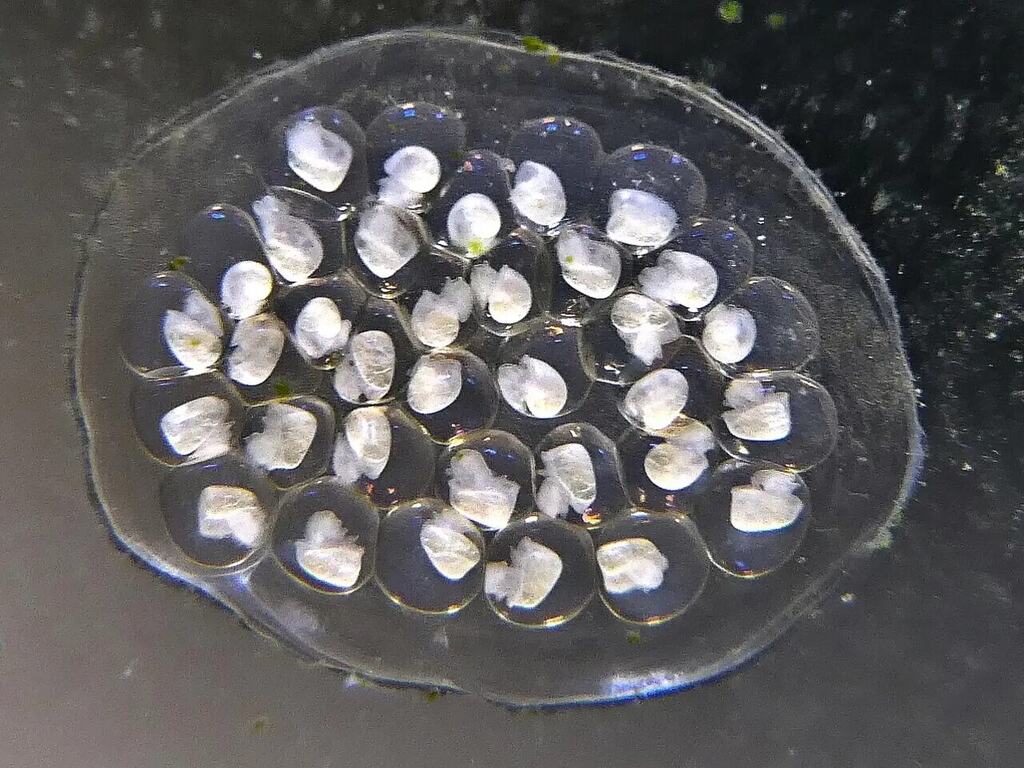
Planorbella duryiWorking species ID for the common ornamental aquarium form
A disk-shelled, air-breathing freshwater snail valued as a grazer and detritus processor. Captive lines occur in several body and shell colours, but the colour of the current house stock has not yet been logged.
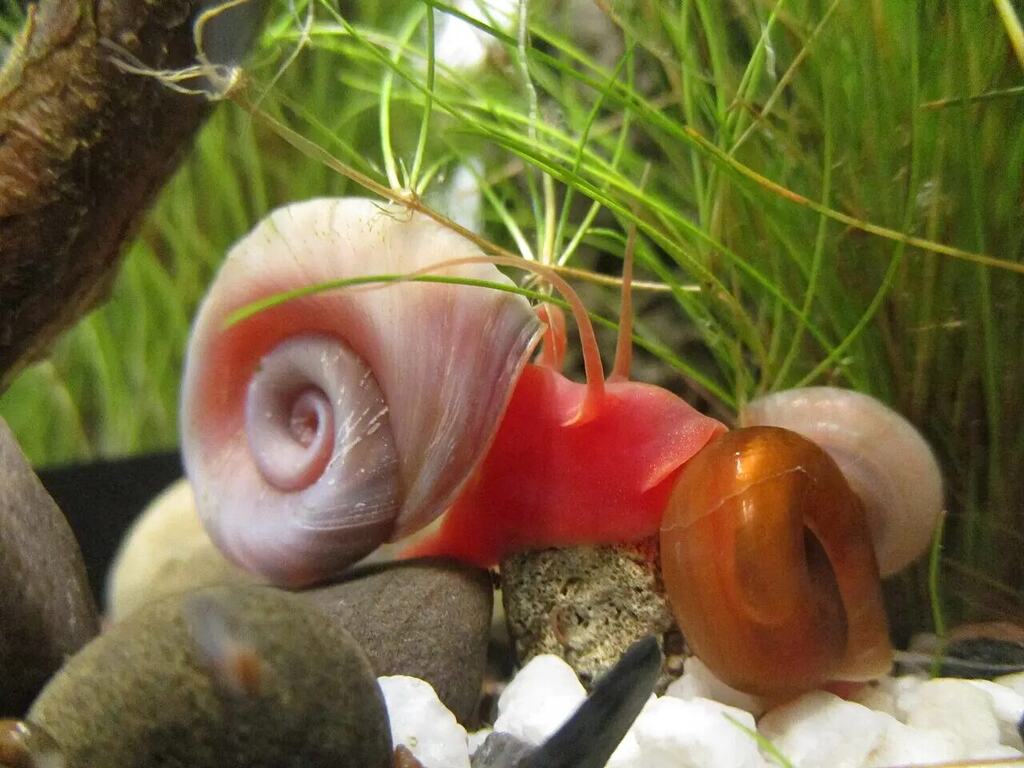
In our room
Recorded at common-name group level in T-001 through T-006 and T-011. T-007 has probable snails, but the group is not confirmed; T-008 through T-010 have none.
Room placement
Operating target
These are the working targets for our systems—not the outer survival limits claimed for the species.
They recycle leftovers and graze surfaces, but they do not remove nutrients from the system. Waste still ends up in the water and substrate until it is exported through maintenance and plant growth.
A sudden population increase usually means more edible material is available. Reduce excess feeding before treating the snails themselves as the problem.
Persistent pitting or whitening points to mineral, hardness, pH, or diet problems. Hardness and calcium availability matter more than a TDS number by itself.
Physid snail
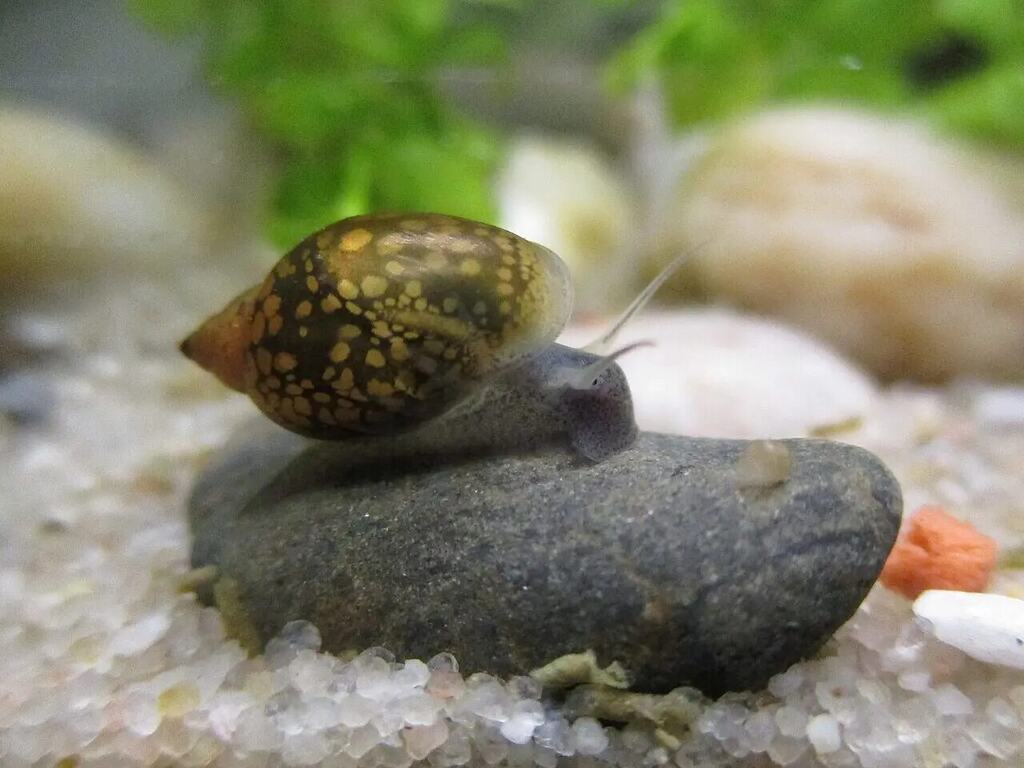
Physella acutaLikely ID for the common aquarium bladder snail; also listed as Physa acuta
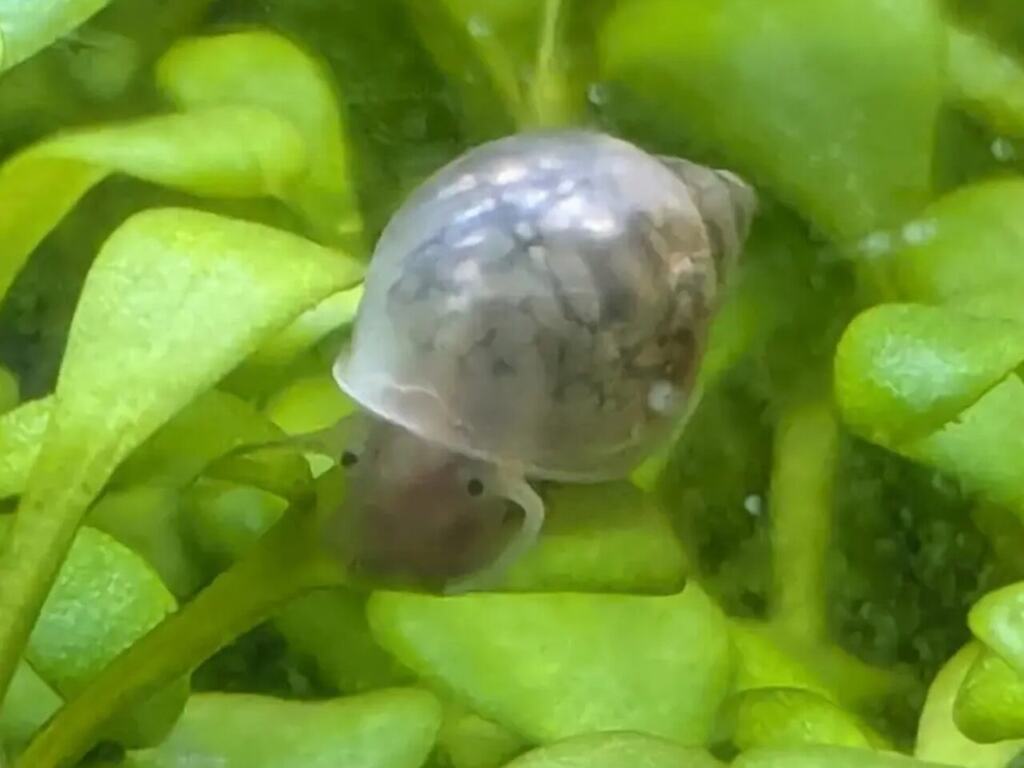
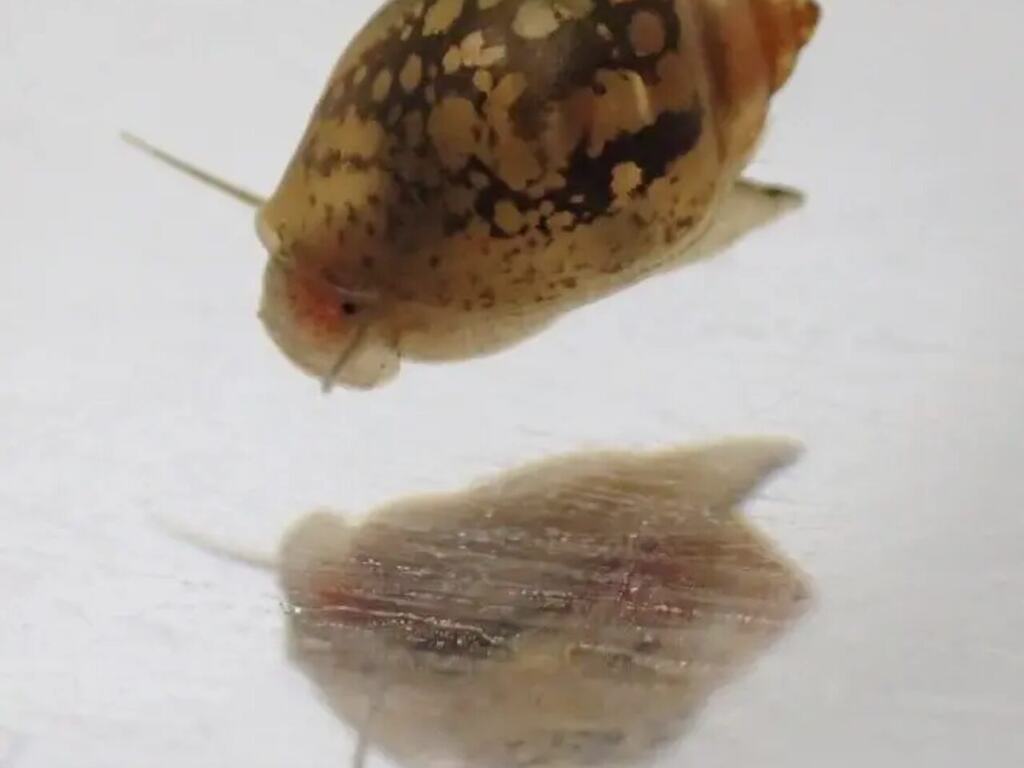
A small, quick-moving air-breathing snail with a thin, usually mottled shell. The likely species is widespread in aquariums, but exact identification should be checked from clear views of the shell and living animal.
In our room
Recorded at common-name group level in T-001 through T-006 and T-011. T-007 has probable snails, but the group is not confirmed; T-008 through T-010 have none.
Room placement
Operating target
These are the working targets for our systems—not the outer survival limits claimed for the species.
With the shell upright and its opening facing you, a physid opening is on the left. Long, threadlike tentacles and rapid movement help separate bladder snails from pond snails.
One introduced animal can establish a population. That makes them useful and resilient, but it also makes plant transfer and responsible containment important.
They mainly graze surface growth and weakened tissue. Visible damage to healthy plants should trigger a closer look at plant health, food scarcity, and whether the snail identification is actually correct.
Minute planorbid snail
Gyraulus sp.Possible G. parvus; species not confirmed from the house stock
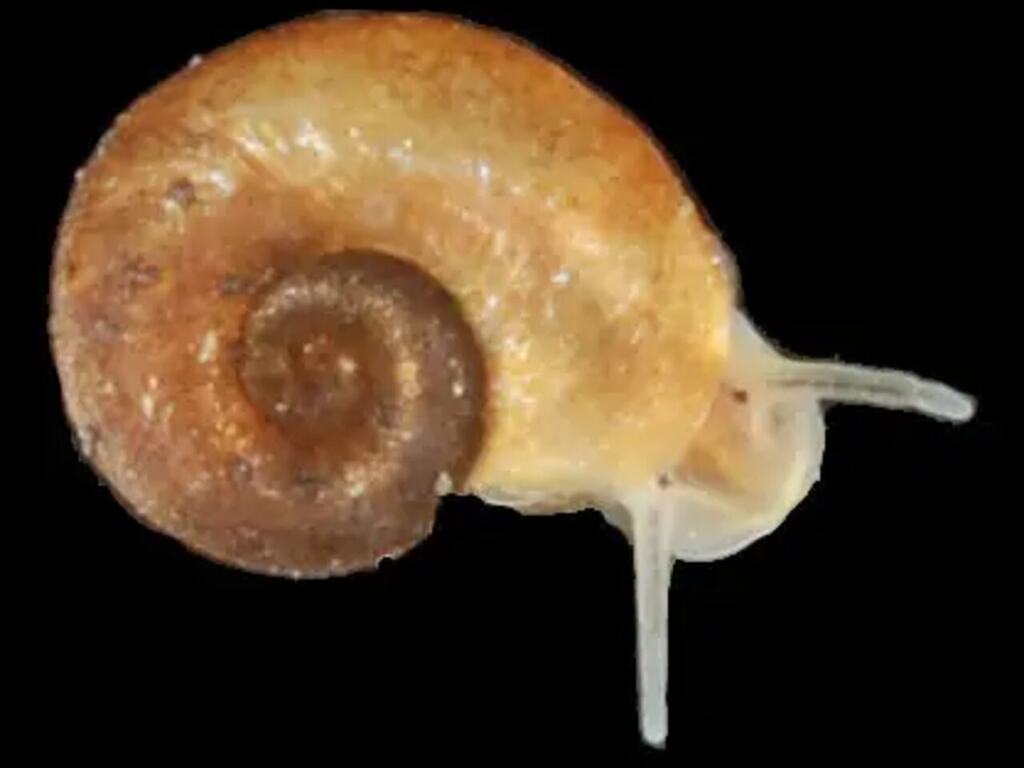
A genuinely tiny, flat-coiled planorbid—not simply a juvenile of the larger ornamental ramshorn. Species-level identification is difficult from the common name alone, so the catalogue stays at genus level for now.
In our room
The sideways-shell dwarf ramshorn group is recorded in T-001 through T-006 and T-011. T-007 has probable snails, but the group is not confirmed; T-008 through T-010 have none.
Room placement
Operating target
These are the working targets for our systems—not the outer survival limits claimed for the species.
Several minute planorbids look alike in an aquarium. A seller label or apparent size is not enough evidence to promote Gyraulus sp. to a confirmed species name.
Their small size lets them work over leaves, fine plants, and crevices that larger snails miss. They are micrograzers and detritus processors, not a substitute for waste export.
Tiny snails and egg masses transfer easily on plants, tools, and wet containers. Keep aquarium water and livestock out of local waterways and inspect material before moving it between systems.
Observation project
Barbronia cf. weberiProvisional comparison only; species confirmation pending
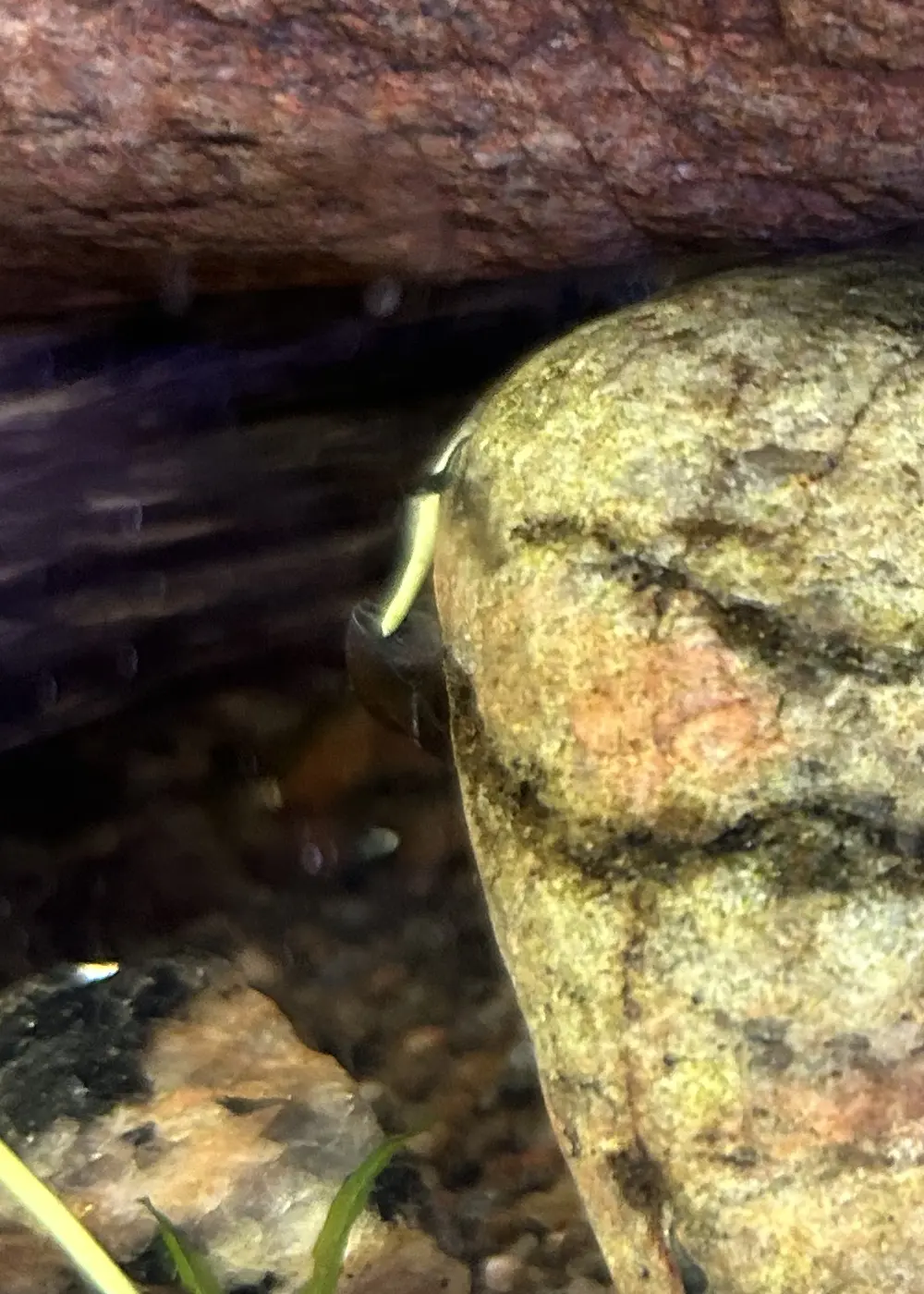
A freshwater leech observation tank established with two founders is maintained as a curiosity and documentation project—not as a feeder or live-food culture. The ‘cf.’ preserves Barbronia weberi as a comparison without turning a plausible identification into a confirmed species claim.
In our room
The dedicated 5-gallon freshwater observation tank is now T-011. Fred and Fiona were the two founders recorded on August 30; current presence is confirmed but the present census is unknown.
Individuals in the project
Operating target
These are the working targets for our systems—not the outer survival limits claimed for the species.
The house photograph documents the living animal, but it is not a taxonomic determination. The working comparison remains provisional and will not be silently promoted to a confirmed species.
Two tiny bladder snails remained alive at the last observation. That records an unsuccessful or incomplete trial—not proof that snails are never prey.
The animals remain in a dedicated observation tank while identity, feeding ecology, reproduction, and transfer risks are investigated. Nothing from the system is released outdoors.
How to read this catalogue
A species may survive outside the range shown here. That does not make the edge of survival a good operating target. Stability, oxygen, acclimation history, and mineral composition all matter.
Aquarium snail names are especially loose. Until shell orientation, scale, aperture, and the living animal support a species-level ID, the catalogue stays at the most defensible rank.
Copper-bearing medication can be dangerous to invertebrates. Plants, snails, eggs, and aquarium water are never released outdoors; local ecosystems are not an extension of the fish room.
Images were resized, compressed, and may be centre-cropped by the layout. Each remains under its linked licence.


.jpg)


.jpg)